
Pan de muerto, also known as bread of the dead, is a sweet, eggy bread that is a traditional part of Day of the Dead celebrations. Learn how to make this delicious bread and how it plays a role in this important holiday.
Want to save this recipe for later?
If you know me in real life, you probably know that I’m not a particularly huge fan of Halloween.
I’m very much not into scary masks, haunted houses, horror movies, or really anything else associated with the holiday in the US. (The irony here is that the universe saw fit to give me a daughter who is a certified Spooky Kid and loves Halloween.)
Day of the Dead, or Día de los muertos, on the other hand? That is an autumnal holiday I have come to love and greatly respect.
This bread, known as pan de muerto or “bread of the dead”, is a big part of Day of the Dead celebrations, and is a recipe I’ve been making for decades. It’s sweet, a bit eggy, and is a great way to practice working with yeast dough. Let’s talk about why the holiday is important and how this bread is a part of the celebrations.
What readers are saying
“My son’s Spanish teacher assigned the class to make some food at home for Day of the Dead to share with family. We made mole enchiladas and this bread. The bread was really good!! This recipe is a keeper!” -Terry
“I also had Señora Fehl and have kept her copy of the recipe for 20 years and make it every year. I came across this recipe that is the same as the tattered one I have been holding onto!” -Melissa
What is Día de los muertos?
Día de los muertos, or Day of the Dead, is traditionally celebrated on November 1 and 2 and centers around gathering with friends and family to celebrate the lives of loved ones who have passed.
Instead of being a time to mourn, Day of the Dead celebrations are joyous, colorful festivities that celebrate the lives of the departed.
Day of the Dead is largely celebrated in Mexico, although it is also observed by Mexican communities around the world. Many Latin American countries celebrate their own versions of Day of the Dead.
During the celebrations, home altars (ofrendas) and the graves of loved ones are decorated with photos, marigolds, sugar skulls, the deceased’s favorite foods, pan de muerto, and more.
I learned about Day of the Dead when I started taking Spanish and have participated in celebrations throughout the years, learning about the significance of the holiday from Mexican and Latin American friends and community members.
The holiday took on a personal significance for me after the death of my beloved mother. I cannot see sugar skulls and marigolds without thinking of her; they serve as an important reminder to celebrate her life and keep her memory alive.
If you choose to celebrate Day of the Dead, please remember that it is not the same as Halloween! It is a very different holiday with great cultural significance.
You can learn more about the holiday, how to make a Day of the Dead altar, and more from the Mexican-American bloggers I have linked to throughout this post.
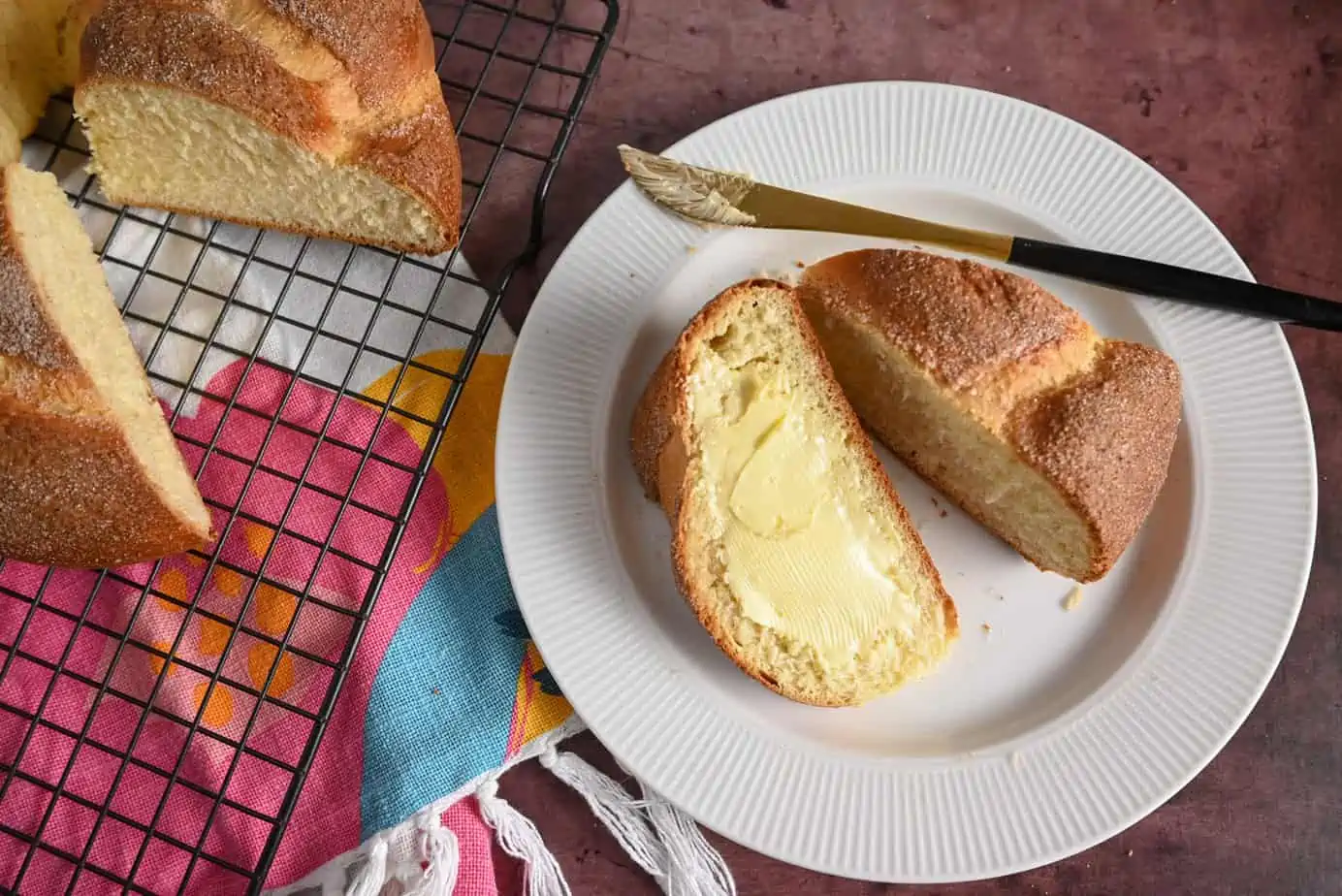
What is pan de muerto?
Food is an important part of Day of the Dead celebrations.
Families prepare the foods most loved by their ancestors in life, and while the exact array of foods varies between families and regions, some of the most common foods enjoyed in the weeks leading up to and during Day of the Dead celebrations include Mexican atole, dishes cooked with marigolds, and pan de muerto, or “bread of the dead”.
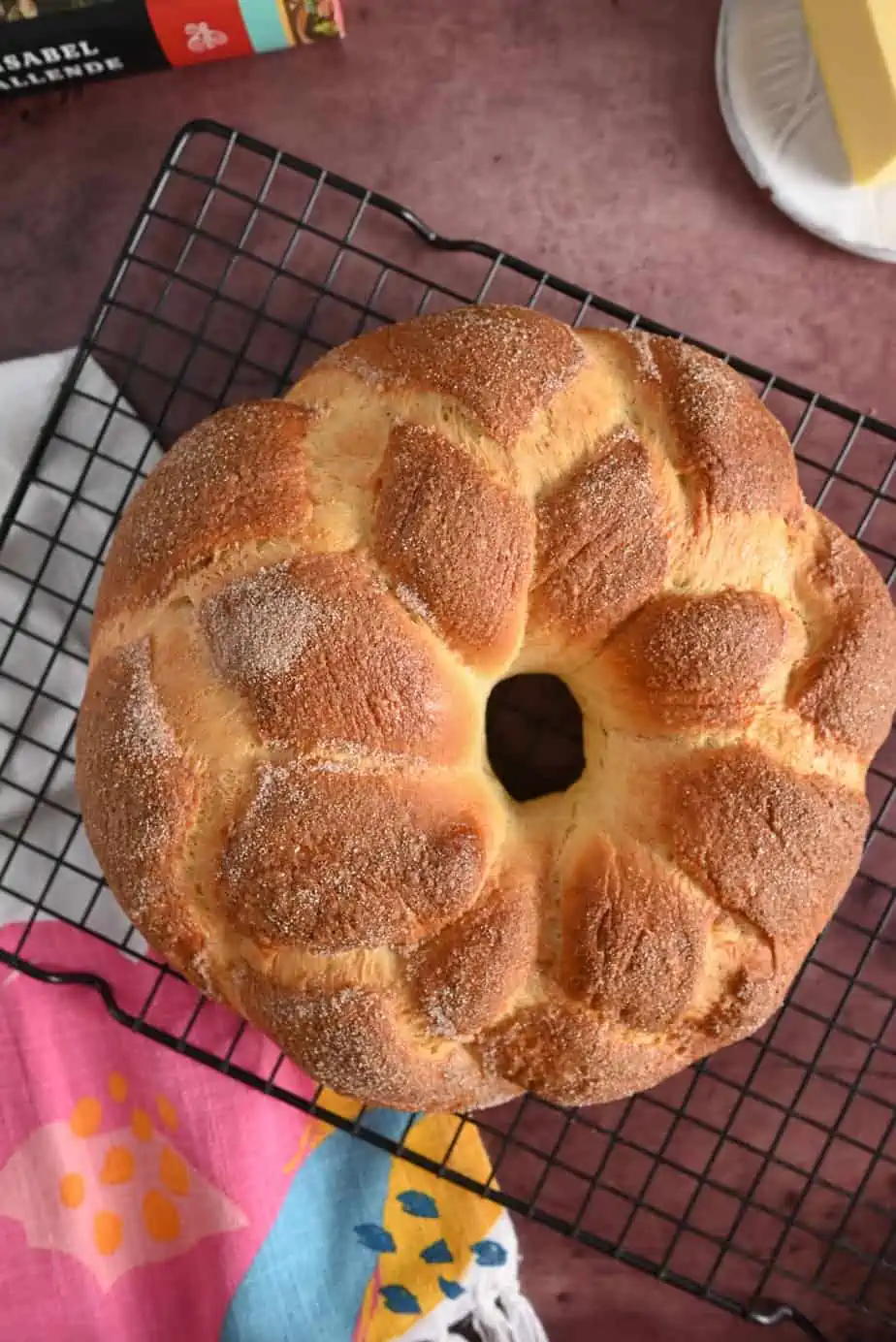
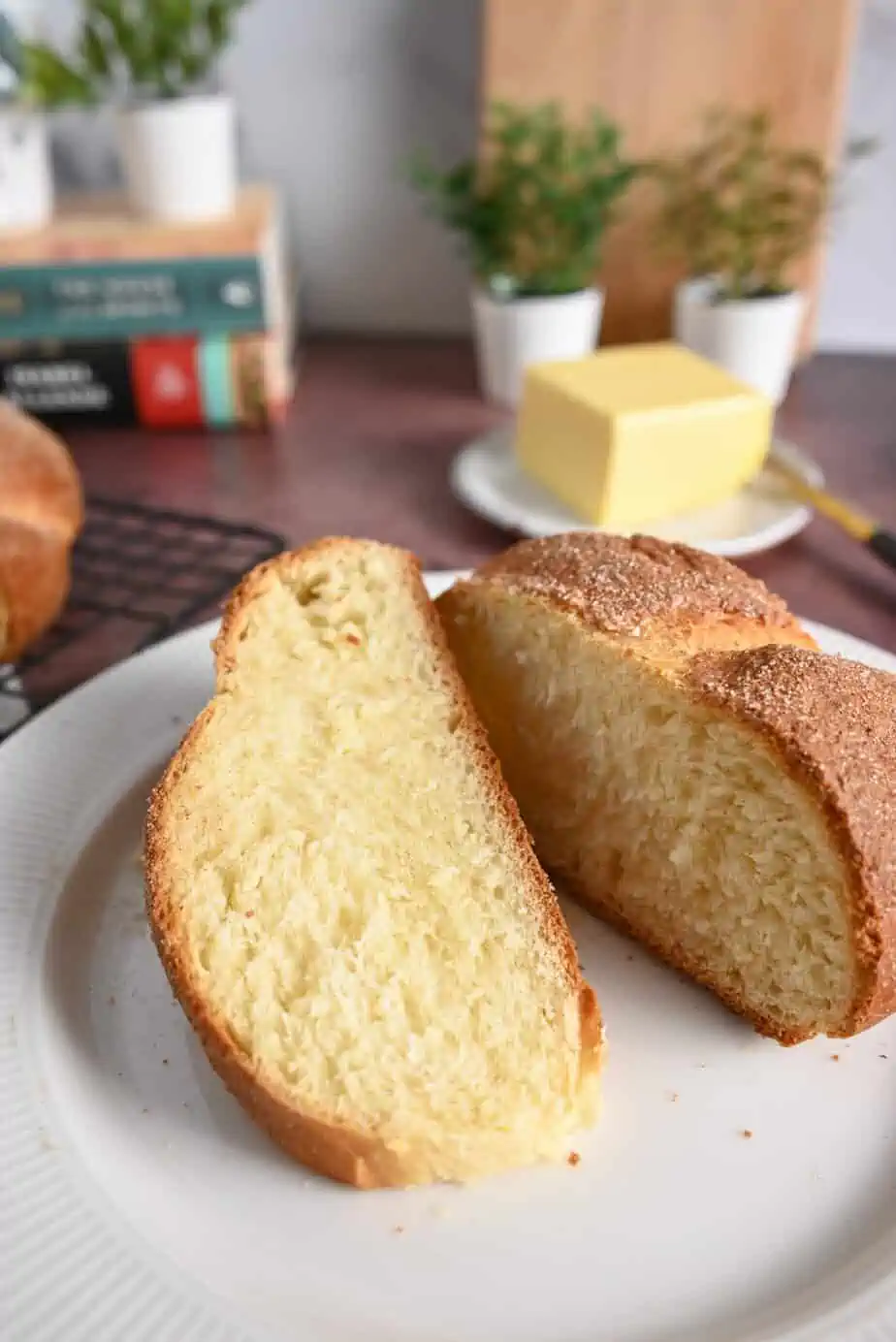
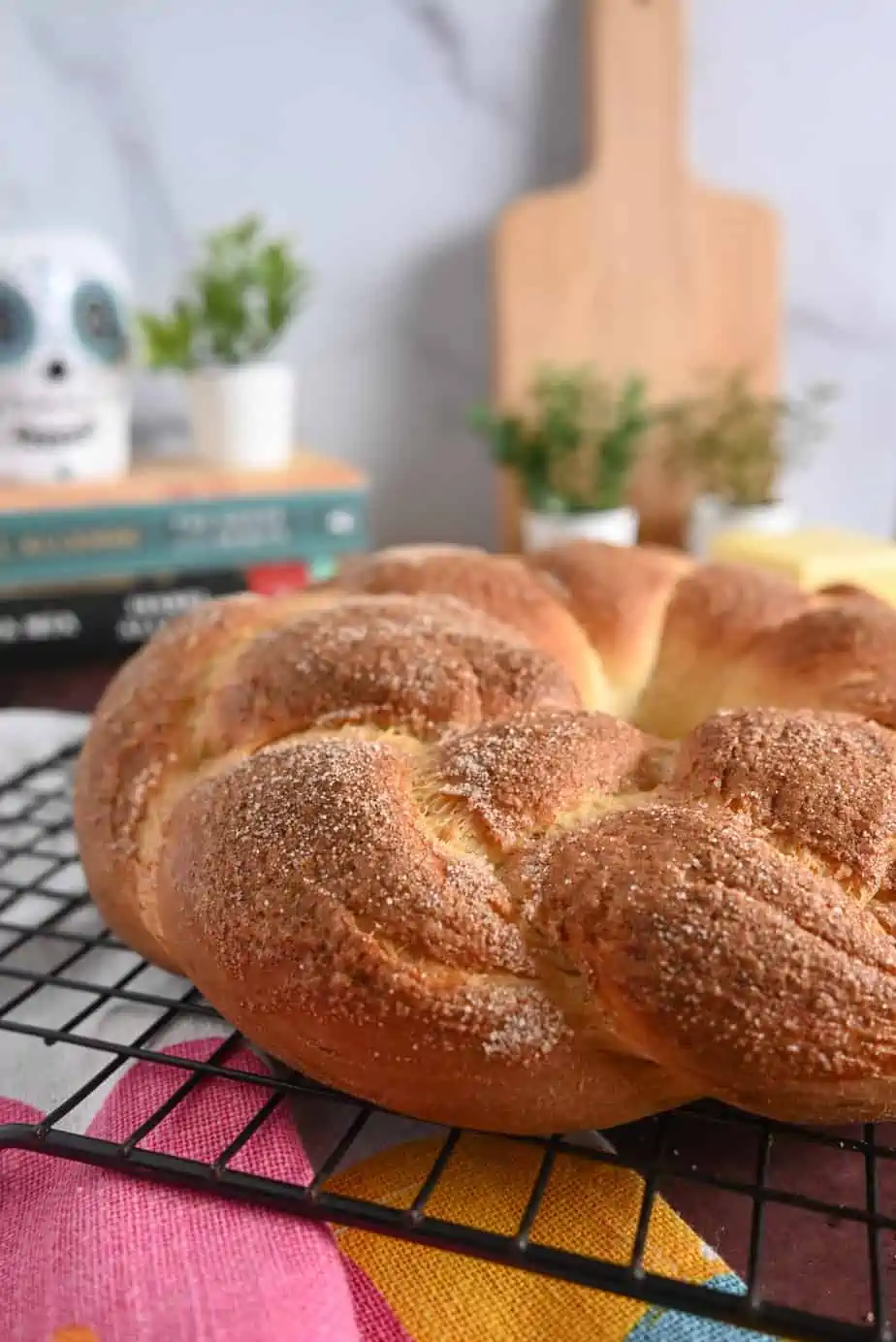
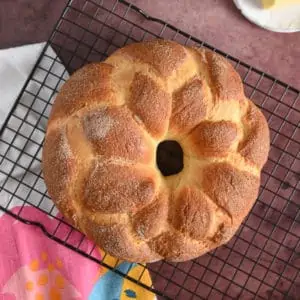
Pan de muerto is a sweet, eggy bread that has a texture similar to brioche, challah, and conchas. The bread is usually topped with sugar and is often decorated with skulls or crossbones made from the dough.
What follows is the same recipe given to me by my high school Spanish teacher and is what we would eat in class every year during Day of the Dead.
For a variation on this recipe, try pumpkin butter pan de muerto.
Ingredient notes
For full measurements and step-by-step instructions, scroll down to the printable recipe card.
The ingredients for this recipe are super simple. If you bake bread often and have yeast on hand, you likely already have what you need to make this bread.
- Milk: Preferably whole milk, but 2% milk and even non-dairy milk will work.
- Unsalted butter: Cut into small pieces.
- Granulated sugar: Used in the dough as well as in the topping.
- Fine sea salt: We always need to add salt to our bread recipes to enhance the flavor!
- Active dry yeast: This gets activated in warm water before adding it to the dough.
- Warm water: Aim for this to be between 100°F and 110°F to activate the yeast without killing it.
- Eggs: We’ll use 1 whole egg and 1 egg yolk in the dough, and the reserved egg white to brush the loaf before baking.
- All-purpose flour
- Cinnamon: For the topping.
Keep in mind that this is an enriched dough, or a dough that includes milk, butter, and egg. These ingredients will slow the rise of the yeast, but make for a rich flavor and texture in the final bread. Other recipes that use enriched doughs include my Texas Roadhouse rolls, Ukrainian paska, and frosted orange rolls.
How to make pan de muerto
This particular recipe is really easy to mix together; you don’t even need a mixer to make the dough, just a bowl and a spatula (or wooden spoon)! Most of the time spent on this recipe is hands-off while you wait for the dough to rise.
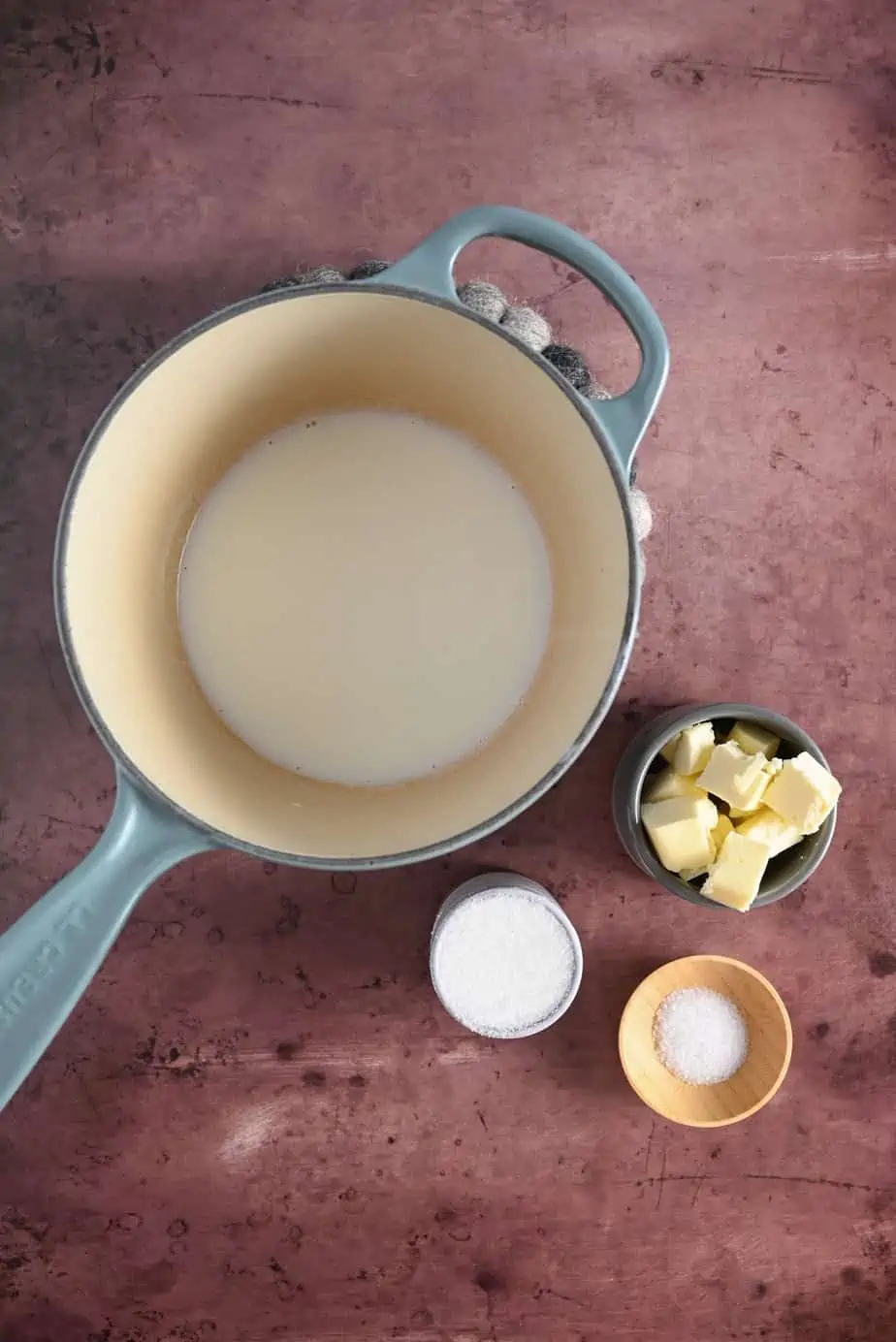
Start by scalding your milk. Do this by heating the milk in a small saucepan over medium heat, stirring frequently, until small bubbles form around the edge of the pot and the milk is steaming. Be careful not to let the milk boil!
Take the milk off the heat and stir in the butter, sugar, and salt. The butter may not completely melt – that’s ok. Let this cool while you move on to the next step.
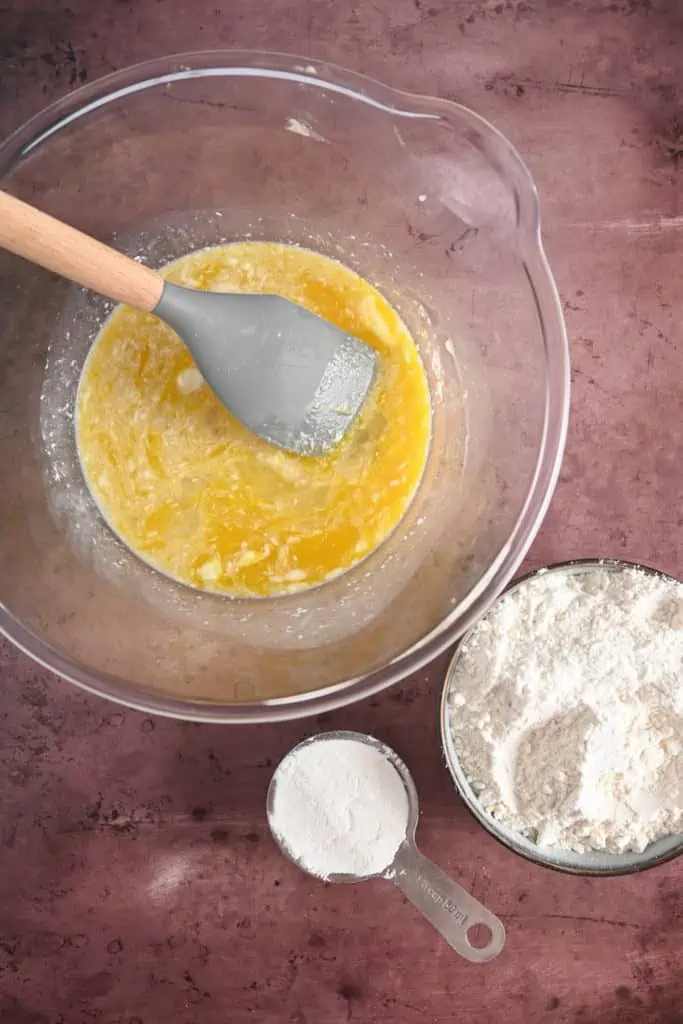
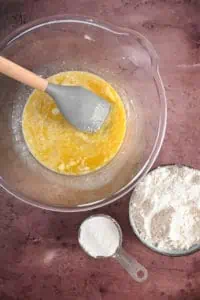
In a large bowl, stir together the yeast with the warm water. Let this stand for about 5 minutes; the yeast should become foamy. This lets you know it is active and ready to go.
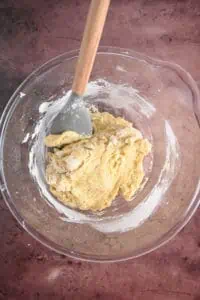
Add the cooled milk mixture, the whole egg and the egg yolk to the yeast mixture. Add in 2 cups of the flour, adding in the last ⅓ cup if needed.
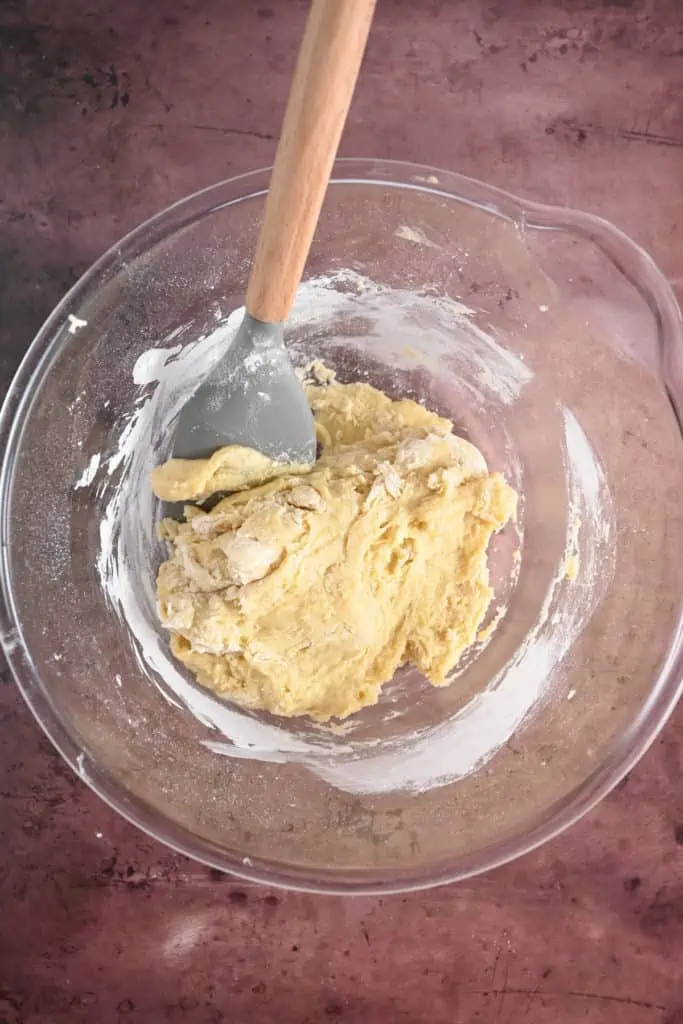
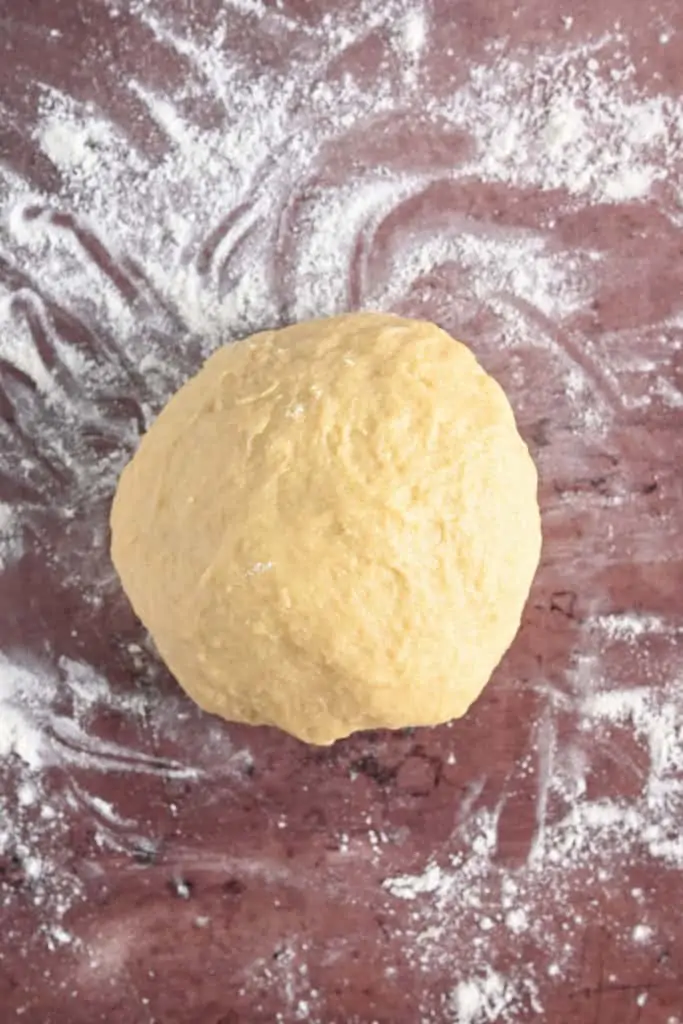
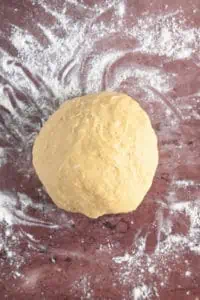
Generously flour your work surface and knead the dough for about 5 minutes. It’ll be tempting to add a lot of extra flour, but try to resist that urge. The dough will become less sticky as you work it, and will eventually become smooth and velvety.
Place the dough in a greased bowl, cover lightly, and let rise until doubled. This will take around 1 ½ hours. Once risen, turn out onto a floured board and knead it again very gently, just once or twice.
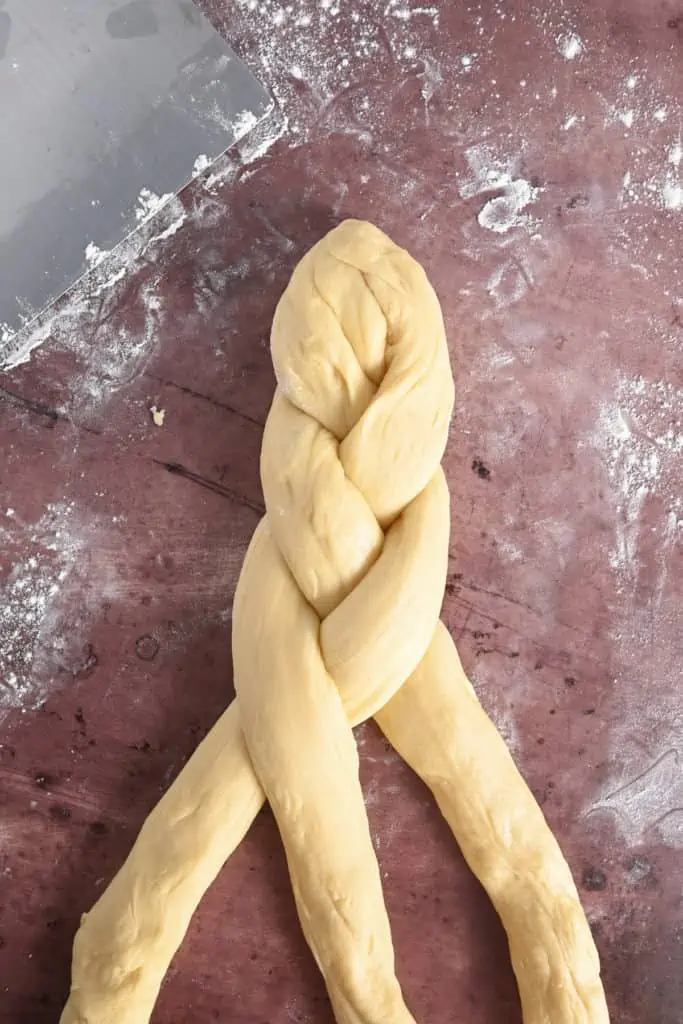
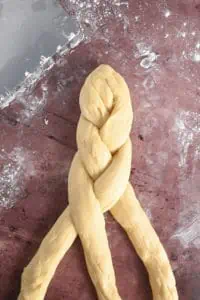
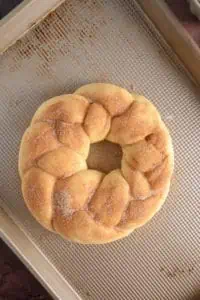
Divide the dough into thirds, shaping each portion into a rope about 12 inches long. Braid the ropes together, pressing the ends securely, then joining the ends to make a wreath.
Place the wreath on a greased baking sheet. If you would like to decorate the bread with crossbones or skulls, do so now.
Let the loaf rise again for about 30 minutes, or until puffy looking.
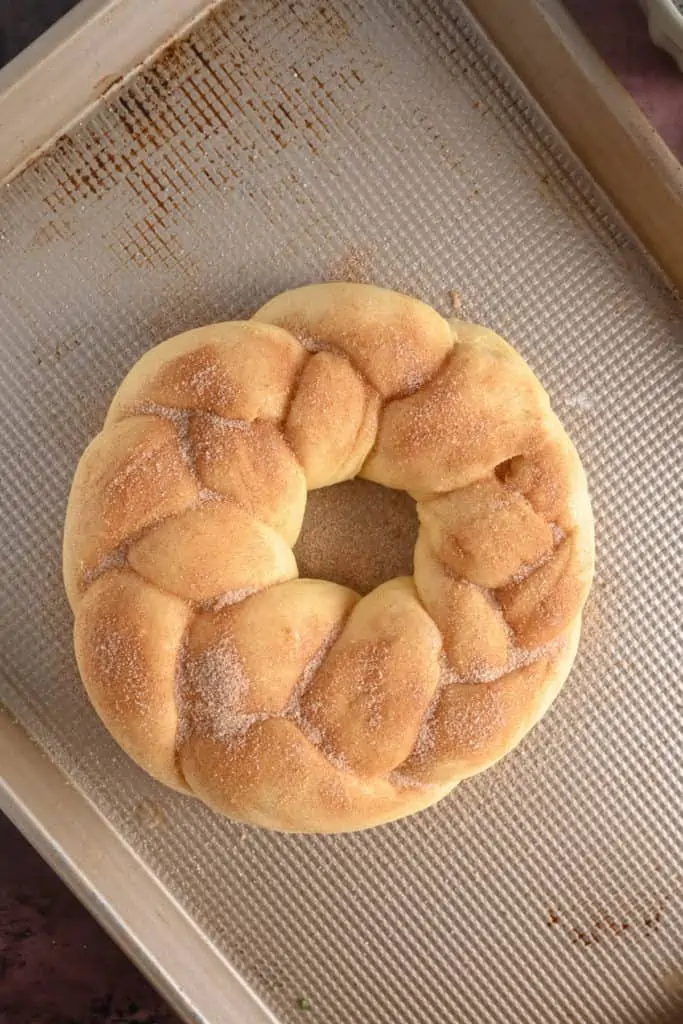
Before baking, beat the reserved egg white and brush over the loaf, then sprinkle with the cinnamon sugar. Bake for about 35 minutes or until richly browned.
Storage
Pan de muerto is best eaten within 2-3 days of baking, and is truly excellent served warm from the oven alongside a hot drink. Try dipping it in a cup of coffee or Mexican hot chocolate.
I recommend wrapping any leftovers well; I typically wrap the cooled bread tightly in foil.
(This may not be traditional, but if you have any left over after a couple of days, it would make excellent french toast.)
I hope you’ll consider learning more about Day of the Dead and incorporating pan de muerto into your family’s celebrations.
Pan de muerto (Bread of the Dead)
Equipment
Ingredients
- ¼ cup whole milk
- ¼ cup unsalted butter cut into small pieces
- ¼ cup granulated sugar
- ½ teaspoon fine sea salt
- 1 (0.25-ounce) packet active dry yeast 2 ¼ teaspoons
- ¼ cup warm water about 100-110℉
- 2 large eggs divided use
- 2 to 2 ⅓ cups all-purpose flour
For the topping:
- ¼ teaspoon cinnamon
- 2 teaspoons granulated sugar
Want to save this recipe for later?
Instructions
- Add milk to a small saucepan over medium heat. Allow the milk to heat, stirring frequently, until small bubbles form around the edge of the pan and the milk is steaming. Don’t let the milk boil. Remove from heat and stir in butter, sugar and salt. Set aside to cool.¼ cup whole milk, ¼ cup unsalted butter, ¼ cup granulated sugar, ½ teaspoon fine sea salt
- In a bowl, mix yeast with warm water; let stand for about 5 minutes. Add milk mixture, 1 whole egg and 1 egg yolk (reserve the egg white).1 (0.25-ounce) packet active dry yeast, ¼ cup warm water, 2 large eggs

- Slowly add in the flour; start with 2 cups, adding the final ⅓ cup as needed. The dough should come together and begin to lose some of its stickiness.2 to 2 ⅓ cups all-purpose flour
- Place dough on a well-floured board and knead until smooth and velvety, about 5 minutes. Try to resist the urge to add lots of extra flour as you knead; the dough will become less sticky as you work it.
- Place in a lightly greased bowl, cover, and let rise in a warm place until doubled, about 1 ½ hours. Gently knead again on a floured board to expel air bubbles.
- Divide dough into 3 equal parts. Shape each into a rope about 12 inches long. Braid ropes together, pressing ends to hold securely; place on a greased baking sheet and join ends firmly to make a wreath. (Optionally, you can also set aside a small piece of dough, about 1/3 cup size, and shape into two "bones" to cross on top of the wreath for a more traditional look.)
- Cover lightly and let rise in a warm place for about 30 minutes or until puffy looking.
- Preheat oven to 350°F.
- Lightly beat the reserved egg white and gently brush over the loaf. Mix cinnamon and sugar, sprinkle onto loaf (avoiding the bones, if you added those). Bake for about 35 minutes or until richly browned. Serve warm with butter.¼ teaspoon cinnamon, 2 teaspoons granulated sugar
Notes
Storage
- Store, well wrapped, at room temperature for 2-3 days.
Nutrition
About Stephie
Stephie is the creator of Stephie Cooks, a food blog that focuses on creating memories around the food we share, with family recipes at the site’s heart. Stephie lives in Central Illinois with her husband, daughter, and a menagerie of cats and dogs. When she’s not in the kitchen or at her computer writing, you can usually find her curled up with a book or working on one of her many grandma-esque hobbies. Learn more >
Everything about this post makes my heart HAPPY!!! I’ve printed the recipe and hope to make it soon!!!
Omg! I had Sra Fehl in high school spanish, and was looking for a recipe like hers that had the bread braided. I can’t believe I ran across this post. Thank you so much for sharing, I can’t wait to make this again!
Omg, hi fellow redbird!! So funny. Hope you enjoyed the bread!
I also had Senora Fehl and have kept her copy of the recipe for 20 years and make it every year. I came across this recipe that is the same as the tattered one I have been holding onto!
I absolutely LOVE this!
My son’s Spanish teacher assigned the class to make some food at home for Day of the Dead to share with family. We made mole enchiladas and this bread. The bread was really good!! This recipe is a keeper!
So glad you enjoyed!! What a fun assignment. I love that.
Oh yum. I would love to try this. Love this holiday.
I added grated lemon rind (tsp), vanilla(tsp) and a little cinnamon to mine and the taste was kind of plain. I am not a frequent bread maker. Can someone give me an idea on how to flavor things up a bit?
Hi there – This isn’t traditionally a fancy-flavored bread. It is slightly sweet, but not strongly flavored. Sometimes you will see it with an orange glaze – you could try that if you are looking to add a bit of “zing” to it.
This bread reminds me of a braided Nisua – a Finnish coffee bread with cardamon that we brushed with coffee and sprinkled with sugar after baking….a perfect breakfast.. ( halloween is not my fav holiday either) Thanks for the recipe-can’t wait to try it!
Really looks gorgeous – I love eggy sweet breads! Reminds me a little of Finnish pulla. I will be trying this bread this weekend – Thank you!
This bread is beautiful. Is that weird to say? Haha. I understand your fear of school mascots. Those things are totally freaky. And who doesn’t hate clowns?
Thank you! I don’t think it is weird to say at all, but then again I did a little jig when I pulled it out of the oven looking so perfect. And I am glad we are in agreement on the mascot thing. No point, just freaky.